

15 Scientists Whose 21st-Century Work Redefined What’s Possible
Copy this code to embed the top 10:
The 21st century has been marked by scientific leaps that once felt like science fiction. From gene editing and artificial intelligence to climate modeling and gravitational waves, today’s leading researchers are reshaping how humanity understands and interacts with the world. Here are 15 scientists whose work has fundamentally altered the trajectory of modern science and society.
-
10
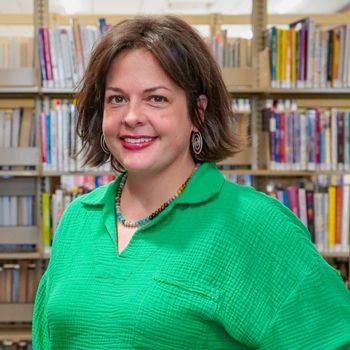
Jennifer Doudna
As co-developer of CRISPR-Cas9 gene-editing technology, Doudna revolutionized biology by making precise genetic modification faster, cheaper, and more accessible. Her work has opened pathways for treating genetic diseases and transforming agriculture. The ethical debates she helped initiate have also shaped global biotech policy.
-
20
Emmanuelle Charpentier
Charpentier co-discovered CRISPR-Cas9 as a programmable gene-editing tool, earning a Nobel Prize alongside Doudna. Her molecular microbiology research turned a bacterial immune mechanism into one of the most powerful tools in modern medicine. The impact spans basic research, drug development, and gene therapy.
-
30

Katalin Karikó
Karikó’s pioneering work on modified mRNA laid the scientific foundation for COVID-19 vaccines developed by Pfizer-BioNTech and Moderna. Her decades-long persistence transformed mRNA from a fragile molecule into a viable therapeutic platform. The technology now promises breakthroughs in cancer treatment and infectious disease prevention.
-
40

Demis Hassabis
As co-founder of DeepMind, Hassabis helped drive AI systems that mastered complex games and, more importantly, predicted protein structures with AlphaFold. The latter solved a decades-old grand challenge in biology, accelerating drug discovery and molecular research worldwide. His work bridges neuroscience, AI, and real-world scientific application.
-
50

Fei-Fei Li
Fei-Fei Li led the creation of ImageNet, a massive visual database that catalyzed the deep learning revolution in computer vision. Her work enabled rapid advances in AI systems capable of recognizing and interpreting images. Beyond research, she has been a leading advocate for human-centered and ethical AI.
-
Advertisement
-
60
Kip Thorne
A key figure in the LIGO collaboration, Thorne helped confirm the existence of gravitational waves in 2015, validating a century-old prediction by Einstein. This discovery opened an entirely new way of observing the universe. Gravitational-wave astronomy is now a major frontier in astrophysics.
-
70

Donna Strickland
Strickland co-developed chirped pulse amplification, a technique that enables ultra-intense laser pulses. Though conceptualized earlier, its 21st-century applications have transformed precision surgery, materials science, and high-field physics. Her Nobel Prize highlighted the continued importance of laser physics in modern technology.
-
80

Tu Youyou
Tu’s discovery of artemisinin-based therapies has saved millions of lives from malaria, particularly in developing countries. While her initial discovery predates the 2000s, its widespread global implementation and recognition have defined 21st-century infectious disease treatment. Artemisinin remains a cornerstone of malaria control strategies.
-
90
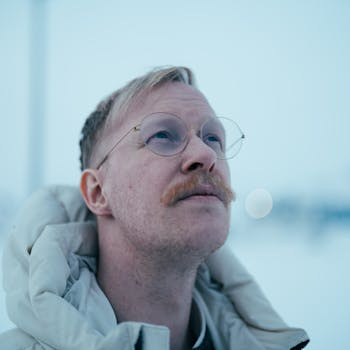
Svante Pääbo
Pääbo founded the field of paleogenomics by sequencing the Neanderthal genome. His work revealed interbreeding between Neanderthals and modern humans, reshaping our understanding of human evolution. Ancient DNA research continues to rewrite prehistory thanks to his methods.
-
100

Frances Arnold
Arnold pioneered directed evolution, engineering enzymes for sustainable chemistry and industrial processes. Her techniques allow scientists to evolve proteins in the lab for greener fuels, pharmaceuticals, and manufacturing. The approach has become foundational in synthetic biology.
-
Advertisement
-
110
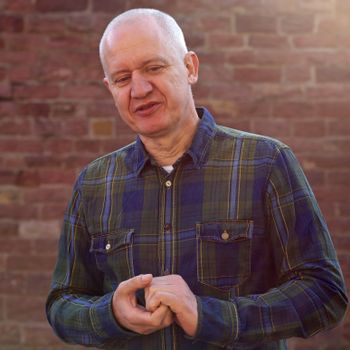
Peter Higgs
Although he proposed the mechanism decades earlier, the 2012 discovery of the Higgs boson at CERN confirmed Higgs’ theoretical work and completed the Standard Model of particle physics. The breakthrough marked one of the most significant achievements in modern physics. It validated massive international collaboration in fundamental science.
-
120
May-Britt Moser
Moser co-discovered grid cells in the brain, revealing how mammals internally map physical space. This finding transformed neuroscience’s understanding of navigation and spatial memory. It also provided insight into disorders such as Alzheimer’s disease.
-
130
James P. Allison
Allison’s development of immune checkpoint therapy revolutionized cancer treatment. By unleashing the immune system to attack tumors, his work led to therapies that have extended and saved countless lives. Immunotherapy is now a central pillar of oncology.
-
140

Andrea Ghez
Ghez provided compelling evidence for a supermassive black hole at the center of the Milky Way through meticulous observation of stellar orbits. Her work strengthened the case for black holes as fundamental cosmic structures. It also demonstrated the power of adaptive optics in astronomy.
-
150

Jane Goodall
Though her early research began in the 20th century, Goodall’s 21st-century influence as a conservation scientist and climate advocate has been profound. Her work has shaped global biodiversity policy and inspired grassroots environmental movements. She remains a leading voice connecting science, conservation, and public action.
Also ranked in
- 15 Pioneering Scientists Who Defined Global Innovation in the 21st Century 12 shared
- 14 21st-Century Scientists Whose Work Is Transforming Everyday Life 12 shared
- 13 Scientists Defining the Frontiers of 21st-Century Discovery 12 shared
- 12 Scientists Shaping the 21st Century Through Breakthrough Discoveries 11 shared
- 15 Pioneering Scientists Driving Global Change in the 21st Century 11 shared
More Lists You Might Like


Frequently Asked Questions
What defines an influential scientist in the 21st century?
Why are so many modern breakthroughs collaborative?
How has technology accelerated scientific discovery in this century?
Are living scientists eligible for recognition like Nobel Prizes?
Missing something?
Suggest an addition. Submissions are reviewed before appearing on the list.