
15 Pioneering Scientists Who Defined Global Innovation in the 21st Century
Copy this code to embed the top 10:
The 21st century has delivered breakthroughs that once sounded like science fiction — from gene editing and gravitational waves to mRNA vaccines and artificial intelligence. Behind these leaps are scientists whose discoveries reshaped medicine, physics, climate science, and computing. Here are 15 pioneers whose work has profoundly influenced our world since 2000.
-
10
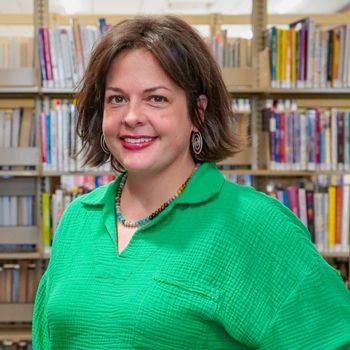
Jennifer Doudna
As co-developer of CRISPR-Cas9 gene-editing technology, Doudna transformed biology and medicine. The tool’s precision and accessibility revolutionized genetic research, agriculture, and potential treatments for inherited diseases. She co-received the 2020 Nobel Prize in Chemistry for this breakthrough.
-
20
Emmanuelle Charpentier
Charpentier’s collaboration with Jennifer Doudna unlocked CRISPR-Cas9 as a programmable gene-editing system. Her work reshaped molecular biology and opened realistic pathways to curing genetic disorders. The global scientific and ethical conversations sparked by CRISPR underscore her influence.
-
30

Katalin Karikó
Karikó’s decades-long research into modified mRNA laid the foundation for mRNA vaccines. Her discoveries enabled the rapid development of COVID-19 vaccines, saving millions of lives worldwide. She shared the 2023 Nobel Prize in Physiology or Medicine for this transformative work.
-
40
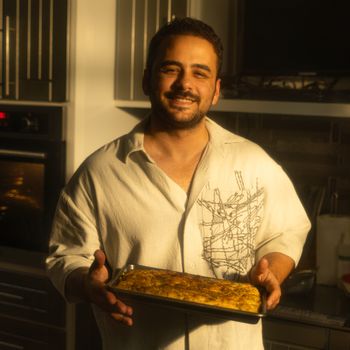
Drew Weissman
Working alongside Katalin Karikó, Weissman helped solve the inflammatory challenges of mRNA delivery. Their breakthrough made mRNA-based therapeutics practical and scalable. The technology now holds promise far beyond vaccines, including cancer treatments.
-
50

Demis Hassabis
As co-founder of DeepMind, Hassabis has driven major advances in artificial intelligence. Under his leadership, AlphaFold solved the decades-old protein-folding problem, accelerating drug discovery and biological research. His work bridges neuroscience, AI, and real-world scientific application.
-
Advertisement
-
60

Fei-Fei Li
Fei-Fei Li played a central role in the deep learning revolution through the creation of ImageNet. The massive labeled dataset catalyzed modern computer vision breakthroughs. Beyond research, she has advocated for ethical and human-centered AI development.
-
70
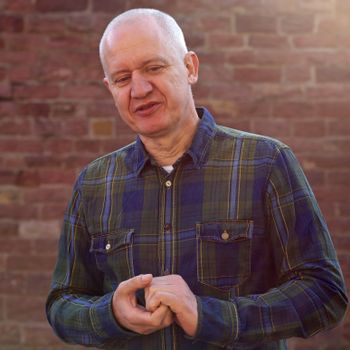
Peter Higgs
Although he proposed the Higgs mechanism decades earlier, the 2012 discovery of the Higgs boson at CERN confirmed his theory and marked a defining scientific moment of the century. The finding completed the Standard Model of particle physics. Higgs received the 2013 Nobel Prize in Physics.
-
80
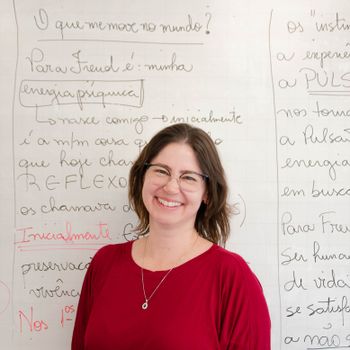
Fabiola Gianotti
As spokesperson for the ATLAS experiment during the Higgs boson discovery and later Director-General of CERN, Gianotti has been central to modern particle physics leadership. She became the first woman to lead CERN. Her role symbolizes both scientific and institutional progress.
-
90
Kip Thorne
Thorne was a leading architect of the LIGO project that detected gravitational waves in 2015. The discovery confirmed a major prediction of Einstein’s general relativity and opened a new era of astrophysics. He shared the 2017 Nobel Prize in Physics.
-
100

Frances Arnold
Arnold pioneered directed evolution, a method for engineering enzymes with new functions. Her work has revolutionized industrial chemistry, enabling cleaner fuels and greener manufacturing processes. She won the 2018 Nobel Prize in Chemistry.
-
Advertisement
-
110
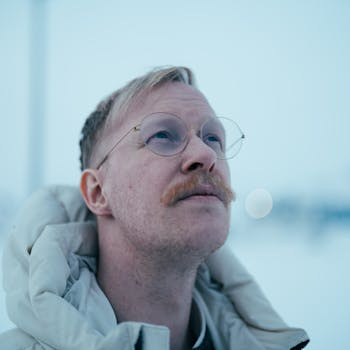
Svante Pääbo
Pääbo founded the field of paleogenomics by sequencing the Neanderthal genome. His work reshaped understanding of human evolution and revealed interbreeding between archaic and modern humans. He received the 2022 Nobel Prize in Physiology or Medicine.
-
120

Tu Youyou
Tu’s discovery of artemisinin, now a cornerstone treatment for malaria, has saved millions of lives globally. While discovered in the late 20th century, its widespread 21st-century deployment cemented her impact. She shared the 2015 Nobel Prize in Physiology or Medicine.
-
130
James P. Allison
Allison’s work on immune checkpoint inhibitors revolutionized cancer treatment. By blocking CTLA-4, his research enabled the immune system to attack tumors more effectively. He shared the 2018 Nobel Prize in Physiology or Medicine.
-
140
May-Britt Moser
Moser co-discovered grid cells in the brain, revealing a neural system for spatial navigation. This breakthrough advanced understanding of memory and cognition. She shared the 2014 Nobel Prize in Physiology or Medicine.
-
150
Tim Berners-Lee
Inventor of the World Wide Web, Berners-Lee’s late-20th-century creation fundamentally shaped the 21st century. His continued advocacy for an open and decentralized web has influenced digital policy, privacy, and data ownership debates worldwide.
Also ranked in
- 14 Scientists Whose Breakthroughs Are Defining the Future of Humanity 12 shared
- 15 Scientists Shaping the 21st Century Through Breakthrough Discovery 12 shared
- 14 Visionary Scientists Shaping the World in the 21st Century 12 shared
- 14 21st-Century Scientists Whose Work Is Transforming Everyday Life 12 shared
- 15 Scientists Whose 21st-Century Work Redefined What’s Possible 12 shared
More Lists You Might Like


Frequently Asked Questions
How were these scientists selected?
Why are several Nobel Prize winners included?
Are living scientists prioritized over historical figures?
Why include figures like Tim Berners-Lee whose main invention predates 2000?
Missing something?
Suggest an addition. Submissions are reviewed before appearing on the list.