
14 Visionary Scientists Shaping the World in the 21st Century
Copy this code to embed the top 10:
The 21st century has already delivered breakthroughs that once seemed like science fiction—from gene editing to gravitational waves. Behind these milestones are scientists whose research is transforming medicine, technology, climate action, and our understanding of the universe. Here are 14 visionaries whose influence continues to shape our global future.
-
10
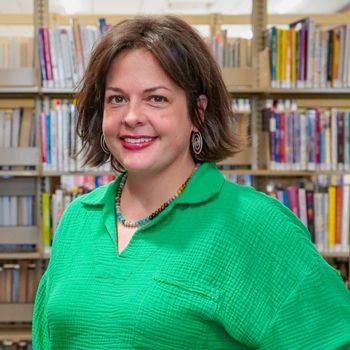
Jennifer Doudna
As a co-developer of CRISPR-Cas9 gene-editing technology, Jennifer Doudna revolutionized modern biology and medicine. Her work earned a Nobel Prize in Chemistry in 2020 and opened the door to potential cures for genetic diseases. Few scientific tools this century have had such sweeping implications.
-
20
Emmanuelle Charpentier
Partnering with Doudna, Emmanuelle Charpentier co-developed CRISPR-Cas9, fundamentally changing genetic engineering. Her discoveries enabled precise DNA editing that is now central to biotech research worldwide. The medical and agricultural applications continue to expand rapidly.
-
30
Katalin Karikó
Karikó’s decades-long work on mRNA technology laid the foundation for COVID-19 vaccines developed by Pfizer-BioNTech and Moderna. Awarded the 2023 Nobel Prize in Physiology or Medicine, her research proved that mRNA could safely instruct cells to produce protective proteins. Her breakthroughs may transform vaccines and cancer therapies alike.
-
40
Drew Weissman
Working alongside Katalin Karikó, Weissman helped pioneer modified mRNA technology that made rapid vaccine development possible. His contributions were pivotal during the global pandemic response. The platform he helped refine is now being explored for numerous infectious diseases.
-
50

Fei-Fei Li
A leading figure in artificial intelligence, Fei-Fei Li co-created ImageNet, a dataset that accelerated deep learning breakthroughs in computer vision. Her advocacy for human-centered AI has influenced both academia and industry. Modern AI systems owe much of their progress to the foundations she helped build.
-
Advertisement
-
60

Demis Hassabis
As co-founder and CEO of DeepMind, Hassabis has driven AI innovations such as AlphaGo and AlphaFold. AlphaFold’s protein-structure predictions solved a decades-old biological challenge and transformed biomedical research. His work demonstrates AI’s growing role in scientific discovery.
-
70
Kip Thorne
A theoretical physicist and co-founder of LIGO, Thorne played a central role in the 2015 detection of gravitational waves. This discovery confirmed a major prediction of Einstein’s general relativity and opened a new window into the cosmos. It marked one of the most celebrated physics breakthroughs of the century.
-
80
Frances Arnold
Arnold won the 2018 Nobel Prize in Chemistry for pioneering directed evolution of enzymes. Her methods allow scientists to engineer proteins for cleaner fuels, pharmaceuticals, and sustainable manufacturing. She has reshaped how chemistry intersects with environmental innovation.
-
90
Svante Pääbo
Pääbo founded the field of paleogenomics and led the sequencing of the Neanderthal genome. His discoveries revealed interbreeding between Neanderthals and modern humans, reshaping our understanding of human evolution. He received the 2022 Nobel Prize in Physiology or Medicine.
-
100

Tu Youyou
Although her discovery of artemisinin began in the 20th century, Tu Youyou’s impact has been especially profound in this century as the drug became a frontline malaria treatment worldwide. Her work has saved millions of lives. She was awarded the Nobel Prize in 2015 for her contribution.
-
Advertisement
-
110
James P. Allison
Allison’s research into immune checkpoint therapy revolutionized cancer treatment. By enabling the immune system to attack tumors more effectively, his work has extended and saved countless lives. He shared the 2018 Nobel Prize in Physiology or Medicine for this breakthrough.
-
120
May-Britt Moser
Moser co-discovered grid cells in the brain, revealing how humans and animals navigate space. Her work has advanced neuroscience’s understanding of memory and spatial awareness. The findings have implications for studying Alzheimer’s and other cognitive disorders.
-
130
Shinya Yamanaka
Yamanaka discovered how to reprogram adult cells into induced pluripotent stem cells (iPSCs). This breakthrough transformed regenerative medicine and disease modeling. His work continues to influence therapies aimed at repairing damaged tissues.
-
140
Katharine Hayhoe
A leading climate scientist, Hayhoe has combined rigorous research with public communication to advance climate literacy. Her work bridges science and policy, helping communities understand local climate impacts. She exemplifies the growing role of scientists as public educators.
Also ranked in
- 15 Pioneering Scientists Driving Global Change in the 21st Century 13 shared
- 14 Scientists Whose Breakthroughs Are Defining the Future of Humanity 13 shared
- 15 Scientists Shaping the 21st Century Through Breakthrough Discovery 12 shared
- 15 Scientists Whose 21st-Century Discoveries Are Reshaping Our Future 12 shared
- 15 Pioneering Scientists Who Defined Global Innovation in the 21st Century 12 shared
More Lists You Might Like

Frequently Asked Questions
What defines an influential scientist in the 21st century?
Why are so many Nobel Prize winners on this list?
How has artificial intelligence changed scientific research?
Are climate scientists considered as influential as lab researchers?
Missing something?
Suggest an addition. Submissions are reviewed before appearing on the list.