

15 Pioneering Scientists Driving Global Change in the 21st Century
Copy this code to embed the top 10:
The 21st century has ushered in scientific breakthroughs that are reshaping medicine, technology, climate research, and our understanding of the universe. Behind these advances are visionary researchers whose work extends far beyond the lab, influencing policy, industry, and everyday life. Here are 15 pioneering scientists whose impact continues to define our era.
-
10
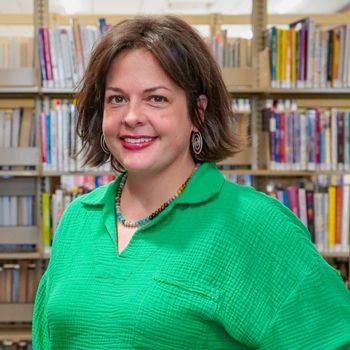
Jennifer Doudna
A co-developer of CRISPR-Cas9 gene-editing technology, Jennifer Doudna revolutionized molecular biology and medicine. Her Nobel Prize–winning work has opened the door to treating genetic diseases and transforming agriculture. Beyond the lab, she is a leading voice in the ethical governance of gene editing.
-
20
Emmanuelle Charpentier
Co-recipient of the 2020 Nobel Prize in Chemistry, Charpentier partnered with Doudna to harness CRISPR for precise gene editing. Her research has accelerated biomedical innovation worldwide. She continues to lead major research initiatives in Europe focused on infectious diseases and genomics.
-
30
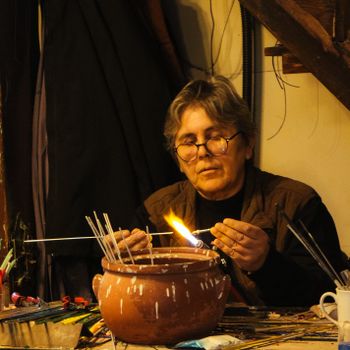
Katalin Karikó
Karikó’s decades-long work on mRNA technology laid the scientific foundation for COVID-19 vaccines. Awarded the Nobel Prize in Physiology or Medicine in 2023, her discoveries enabled rapid vaccine development that saved millions of lives. Her research has also expanded possibilities for cancer and rare disease therapies.
-
40

Drew Weissman
Working alongside Karikó, Weissman helped pioneer modified mRNA techniques that made modern vaccines safe and effective. His contributions were central to the global pandemic response. The technology he helped develop is now reshaping immunology and drug development.
-
50
James P. Allison
Allison’s work on immune checkpoint inhibitors transformed cancer treatment by enabling the immune system to attack tumors. His Nobel Prize–winning discoveries launched the era of cancer immunotherapy. Today, his research continues to guide next-generation therapies.
-
Advertisement
-
60

Tu Youyou
Although her breakthrough began in the 20th century, Tu’s discovery of artemisinin remains one of the most impactful medical contributions of the modern era. Her work dramatically reduced malaria mortality rates worldwide. Artemisinin-based therapies continue to save millions of lives in the 21st century.
-
70
Kip Thorne
A key figure behind the Laser Interferometer Gravitational-Wave Observatory (LIGO), Thorne helped confirm Einstein’s prediction of gravitational waves. The 2015 detection opened an entirely new way to observe the universe. His work has fundamentally expanded astrophysics and cosmology.
-
80

Fei-Fei Li
A leading AI researcher, Fei-Fei Li helped build ImageNet, a dataset that catalyzed the deep learning revolution. Her contributions accelerated computer vision breakthroughs used in medicine, transportation, and robotics. She also advocates for ethical and human-centered artificial intelligence.
-
90

Demis Hassabis
As co-founder of DeepMind, Hassabis has driven AI systems capable of solving complex scientific problems. DeepMind’s AlphaFold accurately predicted protein structures, a milestone for biology and drug discovery. His work bridges neuroscience, artificial intelligence, and real-world applications.
-
100
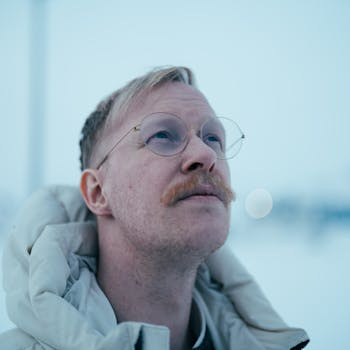
Svante Pääbo
Pääbo founded the field of paleogenomics by sequencing the Neanderthal genome. His discoveries reshaped our understanding of human evolution and interbreeding with archaic humans. Awarded the 2022 Nobel Prize in Physiology or Medicine, his work continues to inform genetics and anthropology.
-
Advertisement
-
110

Frances Arnold
Arnold pioneered directed evolution, a method to engineer enzymes for sustainable chemistry. Her Nobel Prize–winning research enables greener manufacturing processes and biofuels. She remains a leader in applying biology to address climate and energy challenges.
-
120

Shinya Yamanaka
Yamanaka discovered how to reprogram adult cells into induced pluripotent stem cells (iPSCs). This breakthrough transformed regenerative medicine and disease modeling. His work offers hope for treating conditions ranging from Parkinson’s disease to spinal cord injuries.
-
130

Jane Goodall
While her early research began decades ago, Goodall’s 21st-century influence lies in global conservation leadership. Through the Jane Goodall Institute, she advances climate action, wildlife protection, and community-centered sustainability. She remains one of science’s most powerful public advocates.
-
140
Katharine Hayhoe
A leading climate scientist, Hayhoe bridges research and public communication. Her work on climate modeling informs policymakers and communities worldwide. She is widely recognized for translating complex climate science into accessible, actionable insights.
-
150

Anthony Fauci
As director of the U.S. National Institute of Allergy and Infectious Diseases for decades, Fauci guided responses to HIV/AIDS and COVID-19. His leadership shaped public health policy during critical global crises. Few scientists have had such direct influence on modern health strategy.
Also ranked in
- 14 Visionary Scientists Shaping the World in the 21st Century 13 shared
- 14 Scientists Whose Breakthroughs Are Defining the Future of Humanity 12 shared
- 15 Scientists Shaping the 21st Century Through Breakthrough Discovery 12 shared
- 12 Scientists Shaping the 21st Century Through Breakthrough Discoveries 11 shared
- 13 Visionary Scientists Defining 21st-Century Discovery and Innovation 11 shared
More Lists You Might Like
Frequently Asked Questions
What defines scientific influence in the 21st century?
Why are many scientists on this list Nobel Prize winners?
How has technology accelerated scientific impact in recent decades?
Are influential scientists limited to laboratory research?
Missing something?
Suggest an addition. Submissions are reviewed before appearing on the list.