
12 Scientists Shaping the 21st Century Through Breakthrough Discoveries
Copy this code to embed the top 10:
The 21st century has already delivered groundbreaking advances in genetics, artificial intelligence, climate science, and cosmology. Behind these leaps are visionary scientists whose discoveries are transforming how we understand the universe — and ourselves. Here are 12 researchers whose influence continues to redefine modern science and society.
-
10
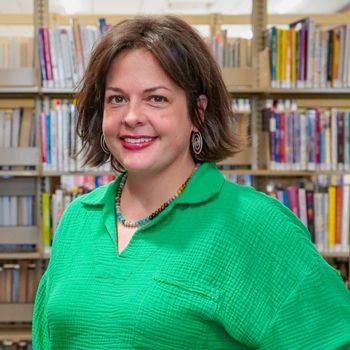
Jennifer Doudna
As co-developer of CRISPR-Cas9 gene-editing technology, Jennifer Doudna revolutionized molecular biology and medicine. The tool allows scientists to precisely edit DNA, opening doors to treating genetic diseases and reshaping biotechnology. Her work earned the 2020 Nobel Prize in Chemistry and fundamentally changed genetic research.
-
20
Emmanuelle Charpentier
Partnering with Jennifer Doudna, Emmanuelle Charpentier helped uncover how CRISPR-Cas9 could be harnessed as a programmable gene-editing tool. Her discoveries have accelerated advancements in agriculture, medicine, and synthetic biology. The global impact of CRISPR places her among the most transformative scientists of the century.
-
30

Katalin Karikó
Katalin Karikó’s decades-long research into messenger RNA laid the foundation for mRNA vaccines. Her work enabled the rapid development of COVID-19 vaccines, saving millions of lives worldwide. Awarded the 2023 Nobel Prize in Physiology or Medicine, her influence extends across immunology and vaccine science.
-
40

Demis Hassabis
As co-founder and CEO of DeepMind, Demis Hassabis has driven major advances in artificial intelligence. Under his leadership, DeepMind developed AlphaGo and AlphaFold, the latter solving the decades-old protein-folding problem. His work bridges AI and scientific discovery, accelerating research across biology and medicine.
-
50
Kip Thorne
A theoretical physicist and key figure in the LIGO collaboration, Kip Thorne contributed to the first direct detection of gravitational waves in 2015. This discovery confirmed a major prediction of Einstein’s general relativity and opened a new era of gravitational-wave astronomy. It reshaped our understanding of black holes and cosmic events.
-
Advertisement
-
60

Tu Youyou
Tu Youyou discovered artemisinin, now one of the most effective treatments for malaria. Though her discovery began in the 20th century, its global health impact has been profound in the 21st century, saving millions of lives. She received the 2015 Nobel Prize in Physiology or Medicine for her work.
-
70
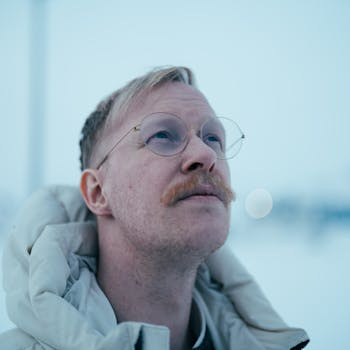
Svante Pääbo
Svante Pääbo founded the field of paleogenomics by sequencing the Neanderthal genome. His research revealed interbreeding between archaic humans and modern Homo sapiens, transforming our understanding of human evolution. He was awarded the 2022 Nobel Prize in Physiology or Medicine.
-
80

Frances Arnold
Frances Arnold pioneered the directed evolution of enzymes, allowing scientists to engineer proteins for medicine, chemistry, and renewable energy. Her methods have led to greener industrial processes and novel pharmaceuticals. She won the 2018 Nobel Prize in Chemistry for this groundbreaking work.
-
90

Jane Goodall
Although her early chimpanzee research began in the 20th century, Jane Goodall’s influence has expanded in the 21st through global conservation and environmental advocacy. Her work reshaped primatology and deepened understanding of animal behavior. She remains a leading voice in biodiversity and climate action.
-
100
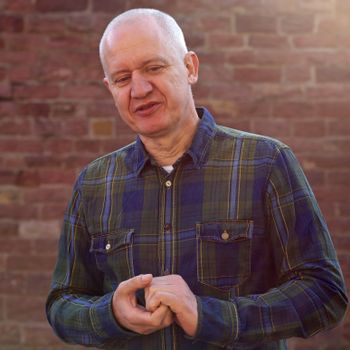
Peter Higgs
The 2012 discovery of the Higgs boson at CERN confirmed Peter Higgs’ 1964 theoretical prediction. This breakthrough explained how particles acquire mass and completed the Standard Model of particle physics. The finding stands as one of the century’s defining moments in fundamental physics.
-
Advertisement
-
110

Drew Weissman
Working alongside Katalin Karikó, Drew Weissman helped develop the modified mRNA technology crucial for safe and effective vaccines. His research directly enabled the rapid deployment of COVID-19 vaccines. In 2023, he shared the Nobel Prize in Physiology or Medicine for this transformative contribution.
-
120

Fei-Fei Li
Fei-Fei Li played a pivotal role in advancing computer vision through the creation of ImageNet, a massive dataset that accelerated deep learning breakthroughs. Her work helped ignite the modern AI revolution. Beyond research, she has been influential in shaping ethical AI development.
Also ranked in
- 15 Pioneering Scientists Driving Global Change in the 21st Century 11 shared
- 13 Visionary Scientists Defining 21st-Century Discovery and Innovation 11 shared
- 12 Pioneers Behind the Biggest Scientific Revolutions of the 21st Century 11 shared
- 15 Pioneering Scientists Who Defined Global Innovation in the 21st Century 11 shared
- 13 Scientists Defining the Frontiers of 21st-Century Discovery 11 shared
More Lists You Might Like

Frequently Asked Questions
How were these scientists selected?
Are all these scientists Nobel Prize winners?
Why are some scientists included for work that began in the 20th century?
Is artificial intelligence considered scientific research?
Missing something?
Suggest an addition. Submissions are reviewed before appearing on the list.