
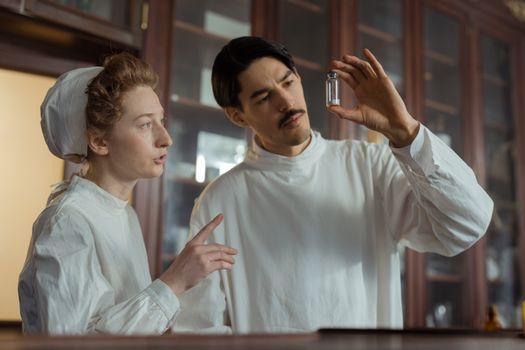
13 Scientists Defining the Frontiers of 21st-Century Discovery
Copy this code to embed the top 10:
The 21st century has already delivered breakthroughs once thought impossible—from gene editing to gravitational waves. Behind these milestones are scientists whose ideas reshaped entire fields and influenced how humanity tackles its biggest challenges. Here are 13 researchers whose work continues to define the scientific era we’re living in.
-
10

Jennifer Doudna
Co-developer of CRISPR-Cas9 gene-editing technology, Jennifer Doudna transformed biology with a tool that allows precise DNA modification. Her work, recognized with the 2020 Nobel Prize in Chemistry, has opened pathways for treating genetic diseases and revolutionized biotechnology research worldwide.
-
20
Emmanuelle Charpentier
Partnering with Jennifer Doudna, Charpentier helped uncover the programmable nature of CRISPR systems. Her discoveries reshaped molecular biology and accelerated innovations in medicine, agriculture, and synthetic biology.
-
30

Katalin Karikó
Karikó’s decades-long work on mRNA technology laid the foundation for the first successful mRNA vaccines against COVID-19. Awarded the 2023 Nobel Prize in Physiology or Medicine, her research revolutionized vaccine development and opened new frontiers in therapeutic medicine.
-
40

Drew Weissman
Collaborating with Katalin Karikó, Weissman discovered how to modify mRNA to make it safe and effective for human use. His work directly enabled the rapid development of lifesaving vaccines and redefined how future pandemics may be addressed.
-
50
Peter Higgs
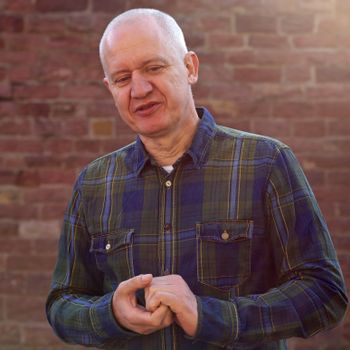
Although his theory dates back to the 20th century, the 2012 discovery of the Higgs boson at CERN confirmed Higgs’ prediction and cemented his influence in modern physics. The finding completed the Standard Model and marked one of the century’s most significant scientific validations.
-
Advertisement
-
60

Donna Strickland
Strickland co-developed chirped pulse amplification, a technique that produces ultra-intense laser pulses. Awarded the 2018 Nobel Prize in Physics, her work has applications in eye surgery, materials science, and high-energy physics.
-
70

Andrea Ghez
Ghez’s meticulous observations provided compelling evidence of a supermassive black hole at the center of the Milky Way. Her Nobel Prize–winning research advanced astrophysics and strengthened our understanding of galactic evolution.
-
80
Kip Thorne
A leading force behind the LIGO collaboration, Thorne helped confirm the existence of gravitational waves in 2015. This breakthrough opened an entirely new way to observe the universe, inaugurating the era of gravitational-wave astronomy.
-
90

Demis Hassabis
As co-founder of DeepMind, Hassabis led the development of AlphaFold, an AI system that accurately predicts protein structures. This achievement solved a decades-old biological puzzle and is accelerating drug discovery and biomedical research globally.
-
100

Fei-Fei Li
A pioneer in artificial intelligence, Fei-Fei Li led the creation of ImageNet, a dataset that catalyzed the deep learning revolution. Her work has profoundly shaped computer vision and the broader AI landscape.
-
Advertisement
-
110

Svante Pääbo
Pääbo founded the field of paleogenomics by sequencing the Neanderthal genome. His discoveries revealed interbreeding between ancient humans and modern Homo sapiens, reshaping our understanding of human evolution.
-
120

Tu Youyou
Though her key discovery began in the 20th century, Tu’s impact has echoed strongly into the 21st. Her work isolating artemisinin transformed malaria treatment and continues to save millions of lives worldwide.
-
130

Jane Goodall
While renowned for her earlier primate research, Goodall’s 21st-century influence stems from global conservation leadership and environmental advocacy. Her science-driven activism has mobilized worldwide efforts in biodiversity protection and climate awareness.
Also ranked in
- 15 Scientists Whose 21st-Century Work Redefined What’s Possible 12 shared
- 12 Scientists Shaping the 21st Century Through Breakthrough Discoveries 11 shared
- 13 Visionary Scientists Defining 21st-Century Discovery and Innovation 11 shared
- 15 Pioneering Scientists Driving Global Change in the 21st Century 10 shared
- 15 Scientists Shaping the 21st Century Through Breakthrough Discovery 10 shared
More Lists You Might Like


Frequently Asked Questions
What defines an influential scientist in the 21st century?
Why are so many biomedical researchers featured on this list?
How has artificial intelligence changed scientific research?
Are Nobel Prizes necessary to measure scientific influence?
Missing something?
Suggest an addition. Submissions are reviewed before appearing on the list.