

13 Scientists Defining Global Progress in the 21st Century
Copy this code to embed the top 10:
The 21st century has already delivered revolutions in genetics, artificial intelligence, medicine, and climate science. Behind these breakthroughs are researchers whose work doesn’t just advance theory—it reshapes economies, public health, and daily life. Here are 13 scientists whose influence continues to define our modern world.
-
10
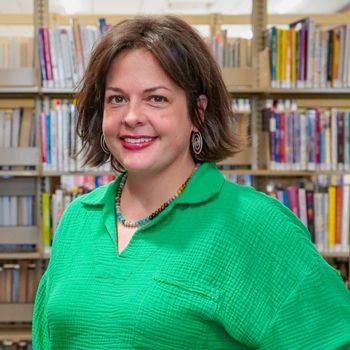
Jennifer Doudna
Co-developer of CRISPR-Cas9 gene-editing technology, Doudna helped unlock a precise and affordable way to edit DNA. Her work has accelerated treatments for genetic diseases and transformed biological research worldwide. The 2020 Nobel Prize in Chemistry cemented CRISPR as one of the century’s most powerful scientific tools.
-
20

Emmanuelle Charpentier
Partnering with Jennifer Doudna, Charpentier co-developed CRISPR gene-editing methods that revolutionized molecular biology. Her discoveries turned a bacterial immune mechanism into a universal gene-editing platform. The technology is now central to medicine, agriculture, and biotechnology innovation.
-
30

Katalin Karikó
Karikó’s decades-long work on messenger RNA laid the scientific foundation for mRNA vaccines. Her research directly enabled the rapid development of COVID-19 vaccines, saving millions of lives. Awarded the 2023 Nobel Prize in Physiology or Medicine, she reshaped vaccine science for future pandemics.
-
40

Drew Weissman
Collaborating with Katalin Karikó, Weissman discovered how to modify mRNA to avoid harmful immune responses. This breakthrough made mRNA-based therapeutics viable and scalable. His work has opened pathways for vaccines and treatments beyond infectious diseases, including cancer therapies.
-
50

Geoffrey Hinton
Often called the 'Godfather of Deep Learning,' Hinton’s neural network research underpins modern artificial intelligence. His work directly influenced breakthroughs in image recognition, speech processing, and generative AI. Nearly every major AI system today builds on principles he helped pioneer.
-
Advertisement
-
60

Demis Hassabis
As co-founder of DeepMind, Hassabis led the development of AlphaGo and AlphaFold. AlphaFold’s protein-structure predictions solved a decades-old biological challenge and accelerated drug discovery worldwide. His interdisciplinary approach bridges neuroscience, AI, and real-world scientific application.
-
70
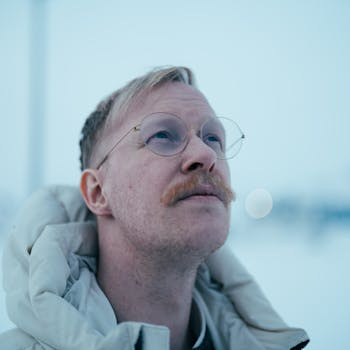
Svante Pääbo
Pääbo founded the field of paleogenomics by sequencing ancient DNA, including the Neanderthal genome. His work revealed interbreeding between archaic humans and modern Homo sapiens. Awarded the 2022 Nobel Prize in Physiology or Medicine, he transformed our understanding of human evolution.
-
80

Feng Zhang
A key figure in adapting CRISPR for use in mammalian cells, Zhang expanded gene editing’s therapeutic potential. His work has driven advances in neuroscience, genetic disease treatment, and biotechnology startups. He remains central to next-generation genome-editing tools.
-
90

Fei-Fei Li
Li’s creation of ImageNet provided the massive labeled dataset that propelled modern computer vision. By enabling large-scale AI training, she helped spark the deep learning boom of the 2010s. Her leadership in ethical AI also shapes global conversations about responsible technology.
-
100

Tu Youyou
Although her discovery of artemisinin began earlier, its global impact has defined 21st-century malaria treatment. Artemisinin-based therapies have saved millions of lives worldwide. Her 2015 Nobel Prize highlighted the ongoing influence of her work in global health.
-
Advertisement
-
110

Jane Goodall
While her groundbreaking chimpanzee research began in the 20th century, Goodall’s 21st-century influence lies in conservation and climate activism. Through the Jane Goodall Institute, she mobilizes global youth and environmental movements. Her science-backed advocacy continues shaping conservation policy.
-
120

Syukuro Manabe
Manabe’s pioneering climate models laid the groundwork for modern climate science predictions. Awarded the 2021 Nobel Prize in Physics, his work allows scientists to accurately simulate global warming scenarios. Policymakers rely heavily on the modeling frameworks he helped establish.
-
130
Tim Berners-Lee
Inventor of the World Wide Web, Berners-Lee’s 21st-century influence centers on open internet standards and digital rights advocacy. Through the World Wide Web Consortium (W3C) and the Solid project, he continues shaping how the internet evolves. His work remains foundational to global communication and commerce.
Also ranked in
- 14 Scientists Whose 21st-Century Breakthroughs Changed Everyday Life 10 shared
- 14 Scientists Whose Discoveries Are Reshaping the 21st Century 10 shared
- 12 Scientists Shaping the 21st Century Through Breakthrough Discoveries 9 shared
- 15 Pioneering Scientists Driving Global Change in the 21st Century 9 shared
- 13 Visionary Scientists Defining 21st-Century Discovery and Innovation 9 shared
More Lists You Might Like

Frequently Asked Questions
How were these scientists selected?
Are all of these scientists Nobel Prize winners?
Why are AI researchers included alongside medical scientists?
Could this list change in the future?
Missing something?
Suggest an addition. Submissions are reviewed before appearing on the list.