
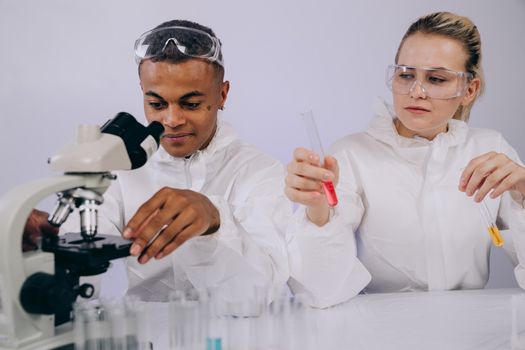
14 Scientists Whose Breakthroughs Are Defining the Future of Humanity
Copy this code to embed the top 10:
The 21st century has already delivered transformative discoveries—from gene editing to gravitational waves and mRNA vaccines. Behind these breakthroughs are scientists whose ideas and leadership are reshaping medicine, technology, climate science, and our understanding of the universe. Here are 14 figures whose work is actively steering the future of humanity.
-
10

Jennifer Doudna
Co-developer of CRISPR-Cas9 gene-editing technology, Doudna revolutionized biology by enabling precise, affordable DNA editing. Awarded the 2020 Nobel Prize in Chemistry, her work is already transforming medicine, agriculture, and genetic research, with therapies for sickle cell disease emerging directly from CRISPR breakthroughs.
-
20
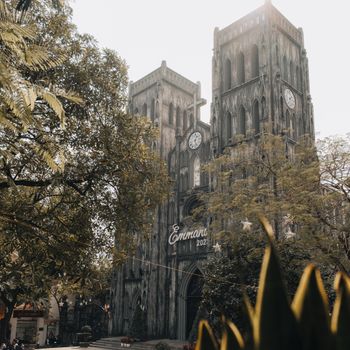
Emmanuelle Charpentier
Sharing the 2020 Nobel Prize with Doudna, Charpentier co-developed CRISPR-Cas9 as a programmable gene-editing tool. Her foundational research on bacterial immune systems unlocked one of the most powerful technologies in modern biotechnology.
-
30

Katalin Karikó
Karikó’s decades-long work on modified mRNA laid the groundwork for the first COVID-19 vaccines. Awarded the 2023 Nobel Prize in Physiology or Medicine, her discoveries have opened the door to mRNA-based treatments for cancer, influenza, and other diseases.
-
40

Drew Weissman
Partnering with Karikó, Weissman helped develop the modified mRNA technology that made vaccines both effective and safe. His work proved instrumental in the rapid global rollout of COVID-19 vaccines and continues to influence next-generation immunotherapies.
-
50

Svante Pääbo
Pääbo founded the field of paleogenomics and sequenced the Neanderthal genome, reshaping our understanding of human evolution. His discoveries revealed interbreeding between ancient hominins and modern humans, fundamentally altering anthropology and genetics.
-
Advertisement
-
60

Kip Thorne
A leading force behind the Laser Interferometer Gravitational-Wave Observatory (LIGO), Thorne helped confirm Einstein’s prediction of gravitational waves in 2015. This discovery opened an entirely new way of observing the universe and earned him a share of the 2017 Nobel Prize in Physics.
-
70

Frances Arnold
Arnold pioneered directed evolution, a method for engineering enzymes with novel functions. Her Nobel Prize–winning work has driven advances in sustainable chemistry, biofuels, and environmentally friendly manufacturing processes.
-
80

Demis Hassabis
As co-founder and CEO of DeepMind, Hassabis has pushed artificial intelligence into scientific discovery. DeepMind’s AlphaFold system solved the 50-year protein-folding problem, providing structure predictions for millions of proteins and accelerating biomedical research worldwide.
-
90

Fei-Fei Li
A pioneer in artificial intelligence and computer vision, Li led the creation of ImageNet, a dataset that catalyzed the deep learning revolution. Her work has profoundly influenced AI research, while her advocacy promotes ethical and human-centered AI development.
-
100

Tu Youyou
Although her discovery of artemisinin began in the 20th century, its 21st-century global impact on malaria treatment is enormous. Her Nobel Prize–winning work has saved millions of lives and remains central to global health strategies.
-
Advertisement
-
110

James P. Allison
Allison’s pioneering research on immune checkpoint inhibitors led to a new era in cancer treatment. By unleashing the immune system to attack tumors, his work has dramatically improved survival rates for several previously lethal cancers.
-
120
May-Britt Moser
Co-discoverer of grid cells in the brain, Moser transformed our understanding of spatial navigation and memory. Her work has major implications for neuroscience and diseases such as Alzheimer’s.
-
130

Didier Queloz
A co-discoverer of the first exoplanet orbiting a sun-like star, Queloz helped launch one of the most dynamic fields in astronomy. Exoplanet research now drives the search for habitable worlds and extraterrestrial life.
-
140
Katharine Hayhoe
A leading climate scientist, Hayhoe combines rigorous atmospheric research with influential public communication. Her work bridges science and policy, helping communities and governments better understand and address climate change.
Also ranked in
- 14 Visionary Scientists Shaping the World in the 21st Century 13 shared
- 14 21st-Century Scientists Whose Work Is Transforming Everyday Life 13 shared
- 15 Pioneering Scientists Driving Global Change in the 21st Century 12 shared
- 15 Scientists Shaping the 21st Century Through Breakthrough Discovery 12 shared
- 15 Scientists Whose 21st-Century Discoveries Are Reshaping Our Future 12 shared
More Lists You Might Like


Frequently Asked Questions
What defines an influential scientist in the 21st century?
Why are so many life scientists featured prominently?
How has artificial intelligence influenced modern scientific discovery?
Are these rankings based on awards alone?
Missing something?
Suggest an addition. Submissions are reviewed before appearing on the list.