
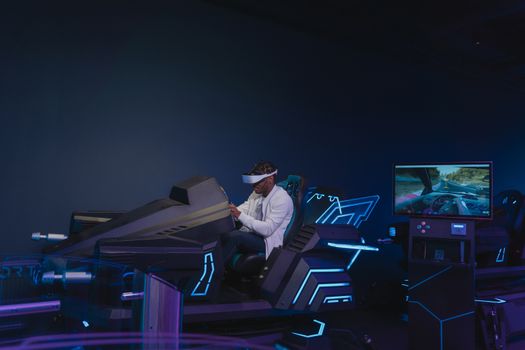
15 Game-Changing Scientists Driving 21st-Century Innovation
Copy this code to embed the top 10:
The 21st century has already delivered breakthroughs that once sounded like science fiction—from gene editing to artificial intelligence that rivals human cognition. Behind these milestones are scientists whose research doesn’t just expand knowledge, but reshapes industries, healthcare, and our understanding of life itself. Here are 15 figures whose influence defines modern science.
-
10

Jennifer Doudna
As co-developer of CRISPR-Cas9 gene editing, Jennifer Doudna transformed biology with a tool that allows precise DNA modification. Her work has accelerated treatments for genetic diseases and reshaped biotechnology. Winning the 2020 Nobel Prize in Chemistry cemented her global influence.
-
20
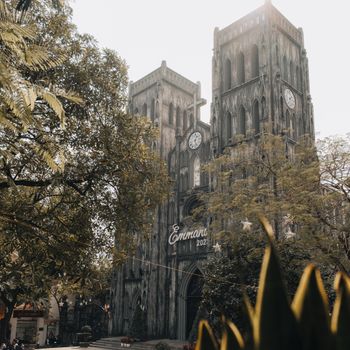
Emmanuelle Charpentier
Co-recipient of the 2020 Nobel Prize alongside Doudna, Charpentier played a pivotal role in uncovering CRISPR’s gene-editing potential. Her foundational microbiology research turned a bacterial defense mechanism into one of the most powerful tools in modern medicine.
-
30

Katalin Karikó
Karikó’s decades-long persistence with mRNA research enabled the rapid development of COVID-19 vaccines. Her discoveries on modifying mRNA to avoid immune rejection revolutionized vaccine science and earned her the 2023 Nobel Prize in Physiology or Medicine.
-
40

Drew Weissman
Working closely with Karikó, Weissman co-developed the mRNA technology that underpins Pfizer-BioNTech and Moderna COVID-19 vaccines. Their partnership turned a once-dismissed concept into a platform likely to transform future vaccines and therapies.
-
50

Geoffrey Hinton
Often called the 'Godfather of AI,' Hinton’s work on deep learning laid the groundwork for modern neural networks. His research directly enabled breakthroughs in image recognition, speech processing, and generative AI systems.
-
Advertisement
-
60

Demis Hassabis
As co-founder of DeepMind, Hassabis led the development of AlphaGo and AlphaFold. AlphaFold’s ability to predict protein structures solved a decades-old biological challenge, dramatically accelerating drug discovery and molecular research.
-
70

Fei-Fei Li
Fei-Fei Li’s creation of ImageNet catalyzed the deep learning revolution in computer vision. By providing a massive labeled dataset, she enabled rapid advances in AI systems that now power everything from medical diagnostics to autonomous vehicles.
-
80

David Liu
A pioneer in next-generation gene editing, Liu developed base editing and prime editing techniques that improve precision beyond CRISPR-Cas9. His innovations are already being explored in treatments for previously untreatable genetic disorders.
-
90

Svante Pääbo
Pääbo founded the field of paleogenomics by sequencing the Neanderthal genome. His discoveries reshaped our understanding of human evolution and revealed that modern humans interbred with archaic hominins.
-
100

Sarah Gilbert
Gilbert led development of the Oxford-AstraZeneca COVID-19 vaccine, which became one of the most widely distributed vaccines globally. Her work significantly expanded vaccine access, especially in lower-income countries.
-
Advertisement
-
110

Uğur Şahin
As co-founder of BioNTech, Şahin helped translate mRNA research into a globally deployed COVID-19 vaccine. His company’s rapid pivot during the pandemic showcased the real-world power of biotech innovation.
-
120

Özlem Türeci
Co-founder and chief medical officer of BioNTech, Türeci played a central scientific role in developing mRNA-based immunotherapies. Her leadership has advanced both pandemic response and personalized cancer treatment research.
-
130

Kip Thorne
A key figure in the LIGO collaboration, Thorne contributed to the first direct detection of gravitational waves in 2015. This discovery confirmed a major prediction of Einstein’s general relativity and opened a new era in astrophysics.
-
140

Lisa Randall
A leading theoretical physicist, Randall’s work on extra dimensions and particle physics has influenced modern cosmology. She is also a major voice in science communication, bridging complex theory and public understanding.
-
150
Cynthia Kenyon
Kenyon’s research on the genetics of aging demonstrated that lifespan can be dramatically extended through specific gene mutations. Her work helped launch the modern field of longevity science and biotech-driven anti-aging research.
Also ranked in
- 12 Scientists Driving the Biggest Breakthroughs of the 21st Century 10 shared
- 12 Scientists Shaping the 21st Century Through Breakthrough Discoveries 8 shared
- 15 Pioneering Scientists Driving Global Change in the 21st Century 8 shared
- 13 Visionary Scientists Defining 21st-Century Discovery and Innovation 8 shared
- 14 Scientists Whose Breakthroughs Are Defining the Future of Humanity 8 shared
More Lists You Might Like

Frequently Asked Questions
What defines a scientist’s influence in the 21st century?
Why are so many influential scientists connected to biotechnology?
How has artificial intelligence changed scientific research?
Are Nobel Prize winners always the most influential scientists?
Missing something?
Suggest an addition. Submissions are reviewed before appearing on the list.