
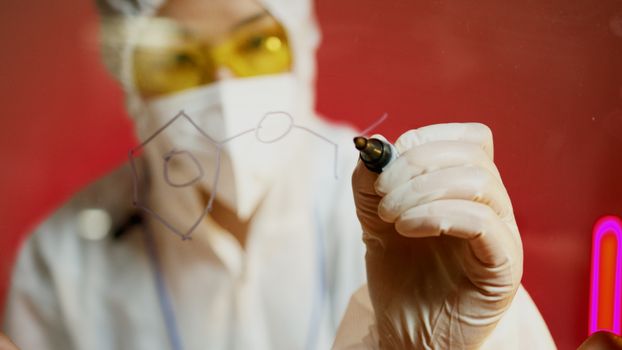
12 Scientists Driving the Biggest Breakthroughs of the 21st Century
Copy this code to embed the top 10:
The 21st century has already delivered gene editing, mRNA vaccines, artificial intelligence revolutions, and deeper insights into the universe than ever before. Behind these breakthroughs are scientists whose work doesn’t just advance knowledge—it reshapes industries, public health, and the future of humanity. Here are 12 researchers whose influence defines modern science.
-
10

Jennifer Doudna
As co-developer of CRISPR-Cas9 gene editing, Doudna transformed biology into a programmable science. The technology has revolutionized medicine, agriculture, and biotechnology, enabling precise DNA edits once thought impossible. Her work earned a Nobel Prize and sparked global ethical discussions about genetic engineering.
-
20
Emmanuelle Charpentier
Charpentier co-discovered CRISPR-Cas9’s gene-editing capabilities, turning a bacterial defense system into one of the most powerful tools in modern science. Her research has accelerated treatments for genetic disorders and fueled a multibillion-dollar biotech sector. She shares the Nobel Prize in Chemistry for this groundbreaking achievement.
-
30

Katalin Karikó
Karikó’s decades-long persistence in mRNA research laid the scientific foundation for COVID-19 vaccines developed by Pfizer-BioNTech and Moderna. Her discoveries about modifying mRNA made it safe and effective for therapeutic use. This breakthrough reshaped vaccine development and opened doors for new treatments in cancer and rare diseases.
-
40

Drew Weissman
Working closely with Katalin Karikó, Weissman co-developed the modified mRNA technology that enabled rapid vaccine deployment during the COVID-19 pandemic. Their research dramatically reduced inflammatory responses to synthetic mRNA. The impact has permanently changed how scientists approach vaccine design.
-
50

Geoffrey Hinton
Often called the "Godfather of Deep Learning," Hinton’s neural network research underpins modern artificial intelligence systems. His work on backpropagation and deep neural networks enabled advances in speech recognition, computer vision, and generative AI. Today’s AI boom traces directly to his foundational contributions.
-
Advertisement
-
60

Demis Hassabis
As co-founder and CEO of DeepMind, Hassabis led the development of AlphaGo and AlphaFold. AlphaFold’s ability to predict protein structures solved a decades-old biological challenge, accelerating drug discovery and biomedical research. His work bridges neuroscience, AI, and real-world scientific application.
-
70

Fei-Fei Li
Fei-Fei Li spearheaded ImageNet, the massive dataset that catalyzed the deep learning revolution in computer vision. By standardizing large-scale visual data, she enabled rapid AI performance improvements across industries. She is also a leading advocate for human-centered and ethical AI.
-
80

Svante Pääbo
Pääbo founded the field of paleogenomics by sequencing the Neanderthal genome. His discoveries reshaped our understanding of human evolution and revealed genetic links between modern humans and extinct hominins. The work earned him a Nobel Prize and redefined evolutionary biology.
-
90

Frances Arnold
Arnold pioneered directed evolution, a method for engineering enzymes with new or enhanced functions. Her techniques have produced greener industrial processes and advanced biofuel and pharmaceutical development. This approach has become a cornerstone of sustainable chemistry.
-
100

Feng Zhang
Zhang played a crucial role in adapting CRISPR for use in human cells, accelerating its application in biomedical research. His work expanded the gene-editing toolbox with new CRISPR systems. The resulting therapies are now being tested for conditions such as sickle cell disease.
-
Advertisement
-
110

Kip Thorne
A key figure in the LIGO collaboration, Thorne helped confirm the existence of gravitational waves—a major validation of Einstein’s general relativity. The discovery opened a new era of astronomy, allowing scientists to observe cosmic events through spacetime ripples. It marked one of the century’s most profound physics breakthroughs.
-
120

Cynthia Kenyon
Kenyon’s research on aging genes in C. elegans demonstrated that lifespan can be dramatically extended through genetic pathways. Her findings transformed the biology of aging from inevitability to modifiable process. This work laid groundwork for today’s longevity and anti-aging research efforts.
Also ranked in
- 14 Scientists Whose 21st-Century Breakthroughs Changed Everyday Life 10 shared
- 15 Game-Changing Scientists Driving 21st-Century Innovation 10 shared
- 12 Scientists Shaping the 21st Century Through Breakthrough Discoveries 9 shared
- 15 Pioneering Scientists Driving Global Change in the 21st Century 9 shared
- 14 Scientists Whose Breakthroughs Are Defining the Future of Humanity 9 shared
More Lists You Might Like

Frequently Asked Questions
How were these scientists selected?
Are all of these scientists Nobel Prize winners?
Why are AI researchers included alongside biomedical scientists?
Is this ranking definitive?
Missing something?
Suggest an addition. Submissions are reviewed before appearing on the list.