

15 Scientists Transforming Medicine, Technology, and Space in the 21st Century
Copy this code to embed the top 10:
The 21st century has already delivered breakthroughs once thought impossible—from gene editing and gravitational waves to reusable rockets and AI revolutions. Behind these leaps are scientists whose ideas reshaped entire fields and influenced how we live, heal, communicate, and explore. Here are 15 researchers whose work defines the scientific story of our era.
-
10

Jennifer Doudna
Co-developer of CRISPR-Cas9 gene-editing technology, Jennifer Doudna helped unlock a precise and affordable way to rewrite DNA. Her work, which earned a Nobel Prize in Chemistry in 2020, has transformed biomedical research and opened new possibilities for treating genetic diseases.
-
20

Emmanuelle Charpentier
Partnering with Doudna, Charpentier co-developed CRISPR-Cas9 into a programmable gene-editing tool. Her discoveries reshaped molecular biology and launched a new era of biotechnology startups and therapeutic innovation.
-
30

Katalin Karikó
Karikó’s decades-long work on modified mRNA made possible the rapid development of mRNA-based COVID-19 vaccines. Awarded the Nobel Prize in 2023, her research fundamentally changed vaccine science and accelerated RNA-based therapeutics.
-
40

Drew Weissman
Working closely with Karikó, Weissman helped pioneer the nucleoside modifications that stabilized mRNA for safe use in vaccines. His contributions were critical to the success of Pfizer-BioNTech and Moderna’s COVID-19 shots.
-
50

Demis Hassabis
As co-founder and CEO of DeepMind, Hassabis led the development of AlphaGo and AlphaFold. AlphaFold’s accurate protein-structure predictions solved a 50-year-old biology challenge and accelerated drug discovery worldwide.
-
Advertisement
-
60

Kip Thorne
A leading theoretical physicist, Thorne played a central role in the LIGO collaboration that detected gravitational waves in 2015. The discovery confirmed a major prediction of Einstein’s general relativity and opened a new window on the universe.
-
70

Donna Strickland
Strickland co-developed chirped pulse amplification, a technique that produces ultra-intense laser pulses. Her Nobel Prize–winning work has applications in precision manufacturing, eye surgery, and fundamental physics.
-
80

Tu Youyou
Although her key discovery predates 2000, Tu’s impact has been most strongly felt in the 21st century as artemisinin-based therapies became central to global malaria treatment. Her work has saved millions of lives worldwide.
-
90

Jane Goodall
Continuing her decades of primatology and conservation leadership into the 21st century, Goodall has become one of the most influential scientific voices on biodiversity and climate action. Her advocacy bridges rigorous research and global environmental policy.
-
100

Anthony Fauci
As director of the U.S. National Institute of Allergy and Infectious Diseases for much of the century, Fauci shaped responses to HIV/AIDS, Ebola, and COVID-19. His influence on public health policy and infectious disease research has been profound.
-
Advertisement
-
110

May-Britt Moser
Co-discoverer of grid cells in the brain, Moser helped reveal the neural basis of spatial navigation. Her work, recognized with a Nobel Prize, advanced understanding of memory systems and neurological disorders.
-
120
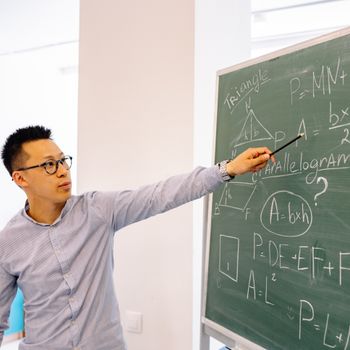
Terence Tao
One of the most prolific mathematicians of the modern era, Tao has made landmark contributions across harmonic analysis, number theory, and partial differential equations. His collaborative approach has influenced how mathematics is conducted in the digital age.
-
130

Sara Seager
An astrophysicist at MIT, Seager is a pioneer in the study of exoplanet atmospheres. Her work has shaped the search for habitable worlds and biosignatures beyond our solar system.
-
140
Emmanuelle Tognoli
A leading figure in neuroscience research on brain coordination dynamics, Tognoli’s work explores how large-scale neural systems synchronize. Her research contributes to understanding cognition, behavior, and neurological disorders.
-
150
Robert Langer
A biomedical engineer and prolific inventor, Langer pioneered drug delivery systems and tissue engineering techniques. His innovations underpin numerous therapies and have shaped the biotechnology industry.
Also ranked in
- 13 Visionary Scientists Defining 21st-Century Discovery and Innovation 10 shared
- 15 Pioneering Scientists Driving Global Change in the 21st Century 9 shared
- 12 Pioneers Behind the Biggest Scientific Revolutions of the 21st Century 9 shared
- 14 21st-Century Scientists Whose Work Is Transforming Everyday Life 9 shared
- 13 Scientists Defining the Frontiers of 21st-Century Discovery 9 shared
More Lists You Might Like


Frequently Asked Questions
What defines scientific influence in the 21st century?
Why are so many biomedical researchers on this list?
Are Nobel Prize winners automatically the most influential scientists?
How has artificial intelligence changed scientific discovery?
Missing something?
Suggest an addition. Submissions are reviewed before appearing on the list.