

14 21st-Century Scientists Whose Discoveries Reshaped Our World
Copy this code to embed the top 10:
The 21st century has already delivered scientific breakthroughs that once sounded like science fiction. From gene editing and gravitational waves to AI and climate modeling, a new generation of researchers has dramatically altered how we understand — and interact with — the world. Here are 14 scientists whose work has had an outsized impact on modern life and the future ahead.
-
10

Jennifer Doudna
As co-developer of CRISPR-Cas9 gene-editing technology, Jennifer Doudna transformed biology and medicine. The tool allows precise, relatively inexpensive DNA editing, accelerating research into genetic diseases, agriculture, and biotechnology. Her Nobel Prize-winning work fundamentally changed what is possible in genetic engineering.
-
20

Emmanuelle Charpentier
Working alongside Jennifer Doudna, Emmanuelle Charpentier co-developed CRISPR-Cas9 as a programmable gene-editing tool. Her microbiology research unlocked a revolutionary method now used globally in labs and clinical trials. The technology’s medical and agricultural implications continue to expand.
-
30

Katalin Karikó
Katalin Karikó’s decades-long research into modified mRNA made possible the rapid development of mRNA COVID-19 vaccines. Once dismissed as impractical, her work became the backbone of a vaccine platform that saved millions of lives. It has also opened doors to new vaccines and cancer therapies.
-
40

Drew Weissman
Partnering with Karikó, Drew Weissman helped discover how to modify mRNA to avoid harmful immune reactions. This breakthrough enabled safe and effective mRNA vaccines at unprecedented speed. Their collaboration earned a Nobel Prize and redefined vaccine science.
-
50

Demis Hassabis
As co-founder and CEO of DeepMind, Demis Hassabis led the development of AlphaFold, which accurately predicts protein structures. This solved a 50-year grand challenge in biology and accelerated drug discovery and disease research. His work bridges artificial intelligence and fundamental science.
-
Advertisement
-
60

Fei-Fei Li
Fei-Fei Li spearheaded the ImageNet project, a massive labeled dataset that catalyzed the deep learning revolution in computer vision. Her work helped propel modern AI systems used in healthcare, transportation, and consumer technology. She also advocates for human-centered and ethical AI.
-
70

Kip Thorne
A theoretical physicist and co-founder of LIGO, Kip Thorne played a central role in the first direct detection of gravitational waves in 2015. This discovery confirmed a key prediction of Einstein’s general relativity and opened a new era of gravitational-wave astronomy.
-
80
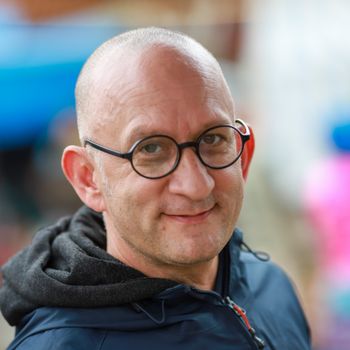
Rainer Weiss
Rainer Weiss was instrumental in designing the laser interferometry techniques that made gravitational-wave detection possible. His engineering vision turned a decades-long theoretical ambition into experimental reality, reshaping astrophysics.
-
90

Andrea Ghez
Andrea Ghez led research providing compelling evidence of a supermassive black hole at the center of the Milky Way. By tracking stellar orbits with extraordinary precision, her team strengthened our understanding of galactic evolution and extreme gravity.
-
100

Svante Pääbo
Svante Pääbo founded the field of paleogenomics by sequencing the Neanderthal genome. His work revealed interbreeding between ancient hominins and modern humans, transforming our understanding of human evolution and genetic heritage.
-
Advertisement
-
110

Tu Youyou
Although her discovery of artemisinin began in the 20th century, Tu Youyou’s impact has been profoundly felt in the 21st. Artemisinin-based therapies remain the frontline treatment against malaria, saving millions of lives worldwide.
-
120

James P. Allison
James P. Allison pioneered immune checkpoint therapy, a breakthrough in cancer treatment. By showing how to unleash the immune system against tumors, his work launched a new era in oncology and significantly improved survival rates for several cancers.
-
130

May-Britt Moser
May-Britt Moser co-discovered grid cells in the brain, revealing a neural system for spatial navigation. Her findings advanced neuroscience’s understanding of memory, cognition, and disorders such as Alzheimer’s disease.
-
140

Carlo Rovelli
A leading voice in quantum gravity research, Carlo Rovelli has advanced loop quantum gravity theory, challenging conventional views of space and time. His work contributes to ongoing efforts to reconcile quantum mechanics with general relativity.
Also ranked in
- 14 Scientists Whose Breakthroughs Are Defining the Future of Humanity 11 shared
- 14 Visionary Scientists Shaping the World in the 21st Century 11 shared
- 15 Pioneering Scientists Who Defined Global Innovation in the 21st Century 11 shared
- 14 21st-Century Scientists Whose Work Is Transforming Everyday Life 11 shared
- 15 Scientists Whose 21st-Century Work Redefined What’s Possible 11 shared
More Lists You Might Like


Frequently Asked Questions
How were these scientists selected?
Why are several Nobel Prize winners included?
Are tech leaders like AI researchers considered scientists?
Is this ranking definitive?
Missing something?
Suggest an addition. Submissions are reviewed before appearing on the list.