

12 Visionary Scientists Whose 21st-Century Breakthroughs Rewired Our Future
Copy this code to embed the top 10:
The 21st century has already delivered discoveries that once felt like science fiction—from gene editing to gravitational waves. Behind these breakthroughs are scientists whose ideas didn’t just advance their fields, but reshaped how humanity understands life, the universe, and our technological future. Here are 12 visionaries whose influence defines modern science.
-
10

Jennifer Doudna
As co-developer of CRISPR-Cas9 gene-editing technology, Jennifer Doudna transformed biology with a tool that allows precise, affordable DNA modification. The breakthrough earned her a Nobel Prize in 2020 and opened the door to potential cures for genetic diseases. Few discoveries this century have had such sweeping medical and ethical implications.
-
20

Emmanuelle Charpentier
Partnering with Doudna, Emmanuelle Charpentier helped turn a bacterial immune mechanism into a revolutionary gene-editing platform. Her work fundamentally altered genetics research and biotechnology. CRISPR’s global adoption makes her one of the most consequential scientific figures of the modern era.
-
30

Katalin Karikó
Karikó’s decades-long persistence in mRNA research paved the way for the rapid development of COVID-19 vaccines. Awarded the Nobel Prize in 2023, her work demonstrated how mRNA could be safely used in humans. The technology is now being explored for cancer, influenza, and other diseases.
-
40

Drew Weissman
Collaborating with Karikó, Weissman helped solve the inflammatory challenges that once limited mRNA therapies. Their discoveries made large-scale mRNA vaccines feasible and safe. His contributions directly impacted billions of lives during the global pandemic.
-
50
Kip Thorne
A leading figure in the LIGO collaboration, Kip Thorne helped confirm the existence of gravitational waves in 2015—a century after Einstein predicted them. The discovery opened an entirely new way to observe the universe. It marked the dawn of gravitational-wave astronomy.
-
Advertisement
-
60

Donna Strickland
Strickland co-developed chirped pulse amplification, a method for generating ultra-intense laser pulses. Awarded the Nobel Prize in 2018, her work has applications in eye surgery, materials science, and high-field physics. It remains foundational in advanced laser technology.
-
70

Demis Hassabis
As co-founder of DeepMind, Hassabis led the development of AlphaFold, an AI system that solved the decades-old protein folding problem. By predicting 3D protein structures with remarkable accuracy, AlphaFold accelerated biological research worldwide. The breakthrough bridged artificial intelligence and molecular biology in unprecedented ways.
-
80
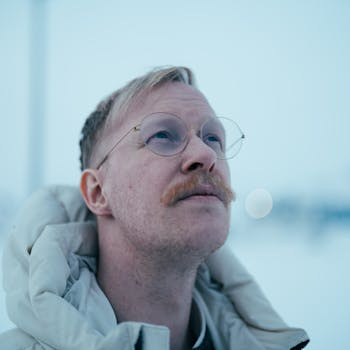
Svante Pääbo
Pääbo founded the field of paleogenomics by sequencing the Neanderthal genome. His work revealed interbreeding between ancient humans and modern Homo sapiens. Awarded the Nobel Prize in 2022, he reshaped our understanding of human evolution.
-
90

Frances Arnold
Arnold pioneered directed evolution, a technique that mimics natural selection to engineer enzymes. Her Nobel Prize–winning work has led to greener industrial chemistry and more sustainable manufacturing processes. It redefined how scientists design biological catalysts.
-
100
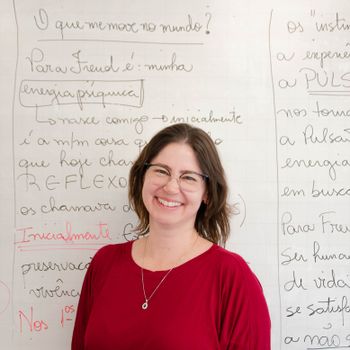
Fabiola Gianotti
As spokesperson for the ATLAS experiment at CERN during the Higgs boson discovery in 2012, Gianotti played a central leadership role in one of physics’ biggest milestones. The confirmation of the Higgs field explained how fundamental particles acquire mass. She later became CERN’s first female Director-General.
-
Advertisement
-
110

Tu Youyou
Although her discovery of artemisinin began in the 20th century, its global impact has defined 21st-century malaria treatment. Her Nobel Prize–winning work has saved millions of lives worldwide. Artemisinin-based therapies remain the gold standard against malaria.
-
120

Jane Goodall
While renowned for her earlier primatology research, Goodall’s 21st-century influence lies in global conservation leadership and climate advocacy. Through the Jane Goodall Institute and Roots & Shoots, she has mobilized a new generation of environmental stewards. Her scientific credibility amplifies urgent ecological action.
Also ranked in
- 12 Scientists Shaping the 21st Century Through Breakthrough Discoveries 10 shared
- 15 Pioneering Scientists Driving Global Change in the 21st Century 10 shared
- 15 Scientists Shaping the 21st Century Through Breakthrough Discovery 10 shared
- 12 Pioneers Behind the Biggest Scientific Revolutions of the 21st Century 10 shared
- 15 Pioneering Scientists Who Defined Global Innovation in the 21st Century 10 shared
More Lists You Might Like


Frequently Asked Questions
What defines an influential scientist in the 21st century?
Why are so many recent Nobel laureates on this list?
How has artificial intelligence influenced modern scientific discovery?
Are living scientists eligible for this kind of recognition?
Missing something?
Suggest an addition. Submissions are reviewed before appearing on the list.