
13 Album Covers That Redefined Visual Branding in Music History
Copy this code to embed the top 10:
Some album covers do more than package music — they become instant visual shorthand for an era, an attitude, or an entire movement. These sleeves didn’t just capture attention in record stores; they reshaped how artists use imagery to build identity. Here are 13 album covers that transformed music into a powerful visual brand.
-
10
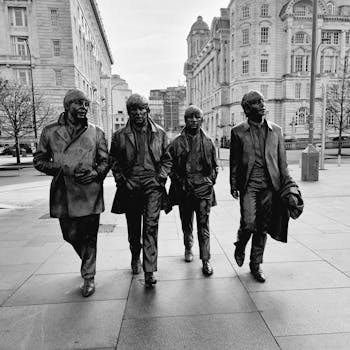
The Beatles – Abbey Road
The simple image of the band walking across a London crosswalk became one of the most recreated photographs in pop culture. Its minimalism, spontaneity, and urban setting helped humanize the world's biggest band while cementing their mythic status.
-
20

Pink Floyd – The Dark Side of the Moon
Designed by Hipgnosis, the prism spectrum design is a masterclass in minimalism and symbolism. It visually communicates the album’s themes of light, madness, and complexity with striking simplicity, making it one of the most recognizable graphics in music history.
-
30

Nirvana – Nevermind
The underwater baby reaching for a dollar bill became an unforgettable image of innocence confronting capitalism. Provocative yet oddly serene, the cover perfectly encapsulated the tension and raw honesty of the grunge era.
-
40

The Rolling Stones – Sticky Fingers
Featuring Andy Warhol’s design with a real working zipper on early pressings, this cover blurred the line between music and pop art. Its bold sensuality reinforced the band’s rebellious image and pushed boundaries in packaging design.
-
50

Michael Jackson – Thriller
Jackson’s white suit and confident pose redefined pop stardom in a single frame. The cover balanced approachability with superstar glamour, reinforcing his crossover appeal and global dominance.
-
Advertisement
-
60

The Velvet Underground & Nico – The Velvet Underground & Nico
Andy Warhol’s banana graphic, complete with peelable sticker on original copies, became a landmark fusion of avant-garde art and rock music. Its stark design signaled that this was no ordinary record.
-
70

Prince – Purple Rain
Prince astride a motorcycle in purple haze cemented his mystique and theatrical charisma. The cover amplified his larger-than-life persona and made the color purple inseparable from his brand.
-
80

The Clash – London Calling
Pennie Smith’s photograph of Paul Simonon smashing his bass, paired with typography inspired by Elvis Presley’s debut album, captured punk’s raw energy. It visually connected rock’s past with its rebellious present.
-
90

Fleetwood Mac – Rumours
The intimate yet dramatic portrait of Stevie Nicks and Mick Fleetwood reflected the personal tensions behind the album. Its mystical aesthetic complemented the record’s emotional storytelling.
-
100

Radiohead – OK Computer
The fragmented, digitally manipulated artwork mirrored the album’s themes of technological anxiety and alienation. Its cold, abstract style helped define the visual language of alternative music in the late 1990s.
-
Advertisement
-
110

Beyoncé – Beyoncé
The stark black background with simple pink lettering was a bold move in an era of elaborate visuals. Its minimalism amplified the surprise release strategy and emphasized Beyoncé’s name as a standalone global brand.
-
120

Kanye West – The College Dropout
The image of West as a dropout bear mascot sitting alone in a gym subtly introduced his underdog narrative. It established a recurring visual motif that became central to his early artistic identity.
-
130

David Bowie – The Rise and Fall of Ziggy Stardust and the Spiders from Mars
Bowie standing under a glowing ‘K. West’ sign in a dimly lit street crystallized the Ziggy Stardust persona. The cover turned glam rock into cinematic myth-making and demonstrated the power of alter ego as branding.
Also ranked in
- 12 Album Covers So Iconic They Became Cultural Symbols 11 shared
- 14 Album Covers That Shaped Pop Culture Beyond the Music 11 shared
- 14 Album Covers So Iconic They Changed Pop Culture Forever 10 shared
- 15 Album Covers That Became Cultural Symbols Beyond the Music 8 shared
- 14 Album Covers That Became Defining Images of Music History 7 shared
More Lists You Might Like






Frequently Asked Questions
Why are album covers important in music history?
Who designs most iconic album covers?
How did vinyl records influence album cover design?
Are album covers still culturally relevant in the streaming era?
Missing something?
Suggest an addition. Submissions are reviewed before appearing on the list.