
15 Album Covers That Became Cultural Symbols Beyond the Music
Copy this code to embed the top 10:
Some album covers stop being packaging and turn into permanent pieces of visual culture. From minimalist photography to surreal illustration, these sleeves shaped fashion, graphic design, and the public identity of the artists behind them. The albums themselves mattered, but the imagery became just as unforgettable.
-
10
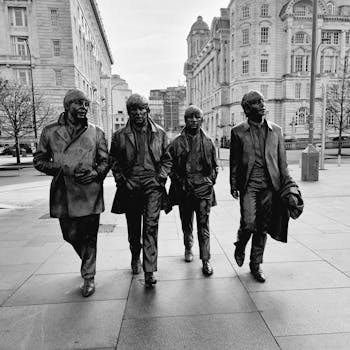
The Beatles – Abbey Road
The simple image of the four Beatles crossing a London street became one of the most recreated photographs in music history. Its understated design contrasted sharply with the psychedelic artwork of the late 1960s, giving the cover a timeless quality that still attracts tourists to Abbey Road today.
-
20

Pink Floyd – The Dark Side of the Moon
Hipgnosis created a design so clean and universal that the prism and rainbow spectrum became shorthand for progressive rock itself. The cover’s minimalist geometry gave it unusual staying power across generations and formats, from vinyl sleeves to modern merchandise.
-
30

Nirvana – Nevermind
The underwater baby swimming toward a dollar bill perfectly captured the album’s themes of innocence, capitalism, and disillusionment. It became one of the defining visual statements of the grunge era and remains instantly recognizable decades later.
-
40

The Velvet Underground & Nico – The Velvet Underground & Nico
Andy Warhol’s banana artwork blurred the line between pop art and commercial music packaging. The original peelable sticker edition turned the cover into an interactive art object and cemented the album’s place in avant-garde culture.
-
50

Michael Jackson – Thriller
Jackson’s white suit, relaxed pose, and cinematic styling transformed the cover into a symbol of pop superstardom. Combined with the album’s record-breaking sales, the imagery became inseparable from 1980s pop culture.
-
Advertisement
-
60

The Clash – London Calling
Pennie Smith’s blurry photograph of Paul Simonon smashing his bass captured punk rock’s raw energy in a single frame. The typography intentionally echoed Elvis Presley’s debut album, linking punk rebellion to rock history.
-
70

Fleetwood Mac – Rumours
The dramatic black-and-white portrait of Stevie Nicks and Mick Fleetwood reflected the emotional tension behind the album’s creation. Its elegant visual style reinforced the mystique surrounding one of rock’s most famously turbulent recording sessions.
-
80

The Notorious B.I.G. – Ready to Die
The image of a baby against a stark white background symbolized birth, vulnerability, and the cycle of life explored throughout the album. The simplicity made it especially powerful during a period when hip-hop covers often leaned toward maximalism.
-
90

Prince – Purple Rain
Prince posed on a purple motorcycle in a scene that blended rock, funk, and theatrical glamour into a single image. The cover reinforced his carefully crafted mystique and helped turn purple itself into a visual trademark associated with the artist.
-
100

Radiohead – Kid A
Stanley Donwood’s jagged mountains and eerie digital textures mirrored the album’s cold, futuristic sound. Its fragmented aesthetic became deeply influential in early-2000s alternative and electronic visual design.
-
Advertisement
-
110

David Bowie – Aladdin Sane
The lightning bolt across Bowie’s face became one of the most enduring images in rock history. The cover captured glam rock’s theatricality while also presenting Bowie as a shape-shifting artistic figure rather than a conventional musician.
-
120

Kendrick Lamar – To Pimp a Butterfly
The group portrait taken in front of the White House delivered a politically charged image that matched the album’s themes of race, power, and identity in America. Few modern hip-hop covers have communicated social commentary so directly.
-
130

Joy Division – Unknown Pleasures
The pulsar waveform graphic became a global symbol of post-punk minimalism despite featuring no band name or album title on the original release. Its scientific origins and stark monochrome design gave it an enduring underground appeal.
-
140

Bruce Springsteen – Born in the U.S.A.
Springsteen standing before the American flag created one of the most debated and misunderstood images in rock music. The patriotic appearance contrasted with the album’s more critical lyrical themes, adding complexity to its cultural legacy.
-
150

Miles Davis – Bitches Brew
Abdul Mati Klarwein’s surreal painting matched the album’s radical fusion of jazz, rock, and psychedelia. The richly detailed artwork expanded expectations for jazz packaging and became a landmark of experimental visual culture.
Also ranked in
- 14 Album Covers That Became Defining Images of Music History 13 shared
- 13 Album Covers That Redefined Visual Art in Music History 12 shared
- 13 Album Sleeves That Changed Visual Culture Far Beyond Music 11 shared
- 14 Album Covers That Shaped Pop Culture Beyond the Music 10 shared
- 12 Album Covers So Iconic They Became Cultural Symbols 9 shared
More Lists You Might Like





Frequently Asked Questions
Why do some album covers become more iconic than others?
Who designed many of the classic rock album covers of the 1970s?
Are album covers still important in the streaming era?
What makes minimalist album covers so memorable?
Have album covers influenced fashion and graphic design?
Missing something?
Suggest an addition. Submissions are reviewed before appearing on the list.