
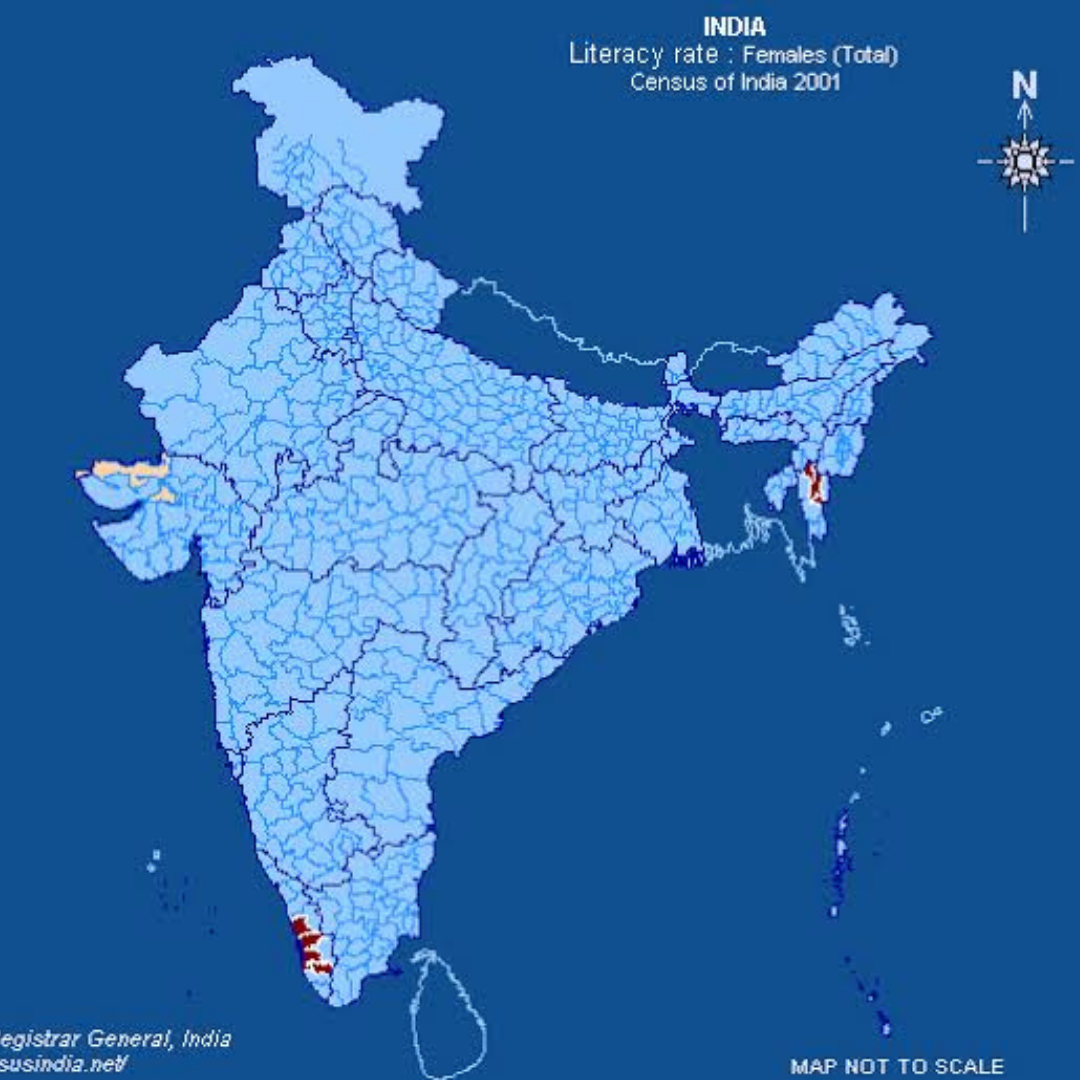
Analysis of Literacy Rate in India Based on Communities
Copy this code to embed the top 10:
An essential indicator of the quality of a country's human capital is literacy. The latest data of India's adult literacy rate is 73.2 per cent. But the government has made any progress in improving literacy in the country over the years. 313 million illiterate people get homes, out of 313 million people, 59 per cent are women.
The high rates of illiteracy of Indian women are because of the two main factors:-
-
10

The corollary gender gap in literacy and
Gender disparity is a key dimension of literacy analysis in India, as male and female literacy rates vary significantly across communities. Examining the gender gap helps highlight structural inequalities and targeted areas for policy intervention.
-
20

The attributable social, economic and cultural factors.
Social, economic, and cultural factors directly influence literacy outcomes among different communities in India. Assessing these underlying determinants provides context for variations in access to education and overall literacy performance.
More Lists You Might Like





Frequently Asked Questions
What does the analysis of literacy rate in India based on communities examine?
What is meant by the corollary gender gap in literacy?
How do social, economic, and cultural factors affect literacy rates in India?
How are the rankings in this community list determined?
Missing something?
Suggest an addition. Submissions are reviewed before appearing on the list.