
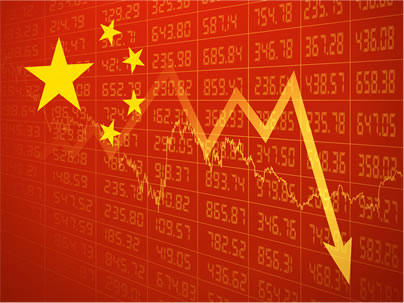
6 facts about China's financial slowdown
Copy this code to embed the top 10:
6 facts about China's financial slowdown examines the structural missteps, policy shifts, and market psychology that turned years of breakneck growth into mounting economic strain. From the unwinding of a massive market bubble and the surge of inexperienced investors to regulatory loosening that intensified volatility, this list breaks down how optimism, leverage, and delayed reforms converged into a sharp downturn—epitomized by the Shanghai Index plunge that erased trillions in value.
Ranked by the Topcount community, these insights reflect collective analysis of what truly drove the slowdown. Vote on the most significant factors, challenge the rankings, and add your perspective to shape how this pivotal chapter in China’s financial history is understood.
-
10
It didn't happen overnight
From the past 20 years, the Communist Party has established social stability in China by promising its people a "Chinese dream" of achieving economic growth and power. All this happened but at the cost of huge debt and a lot of cheap money offered by state-owned banks. Estimations show that the debt might be amounting to a hundred and eighty percent of the country's GDP now.
-
10
It didn't happen overnight
From the past 20 years, the Communist Party has established social stability in China by promising its people a "Chinese dream" of achieving economic growth and power. All this happened but at the cost of huge debt and a lot of cheap money offered by state-owned banks. Estimations show that the debt might be amounting to a hundred and eighty percent of the country's GDP now.
-
20
Reducing restriction on the domestic market further aggravated the
-
20
Reducing restriction on the domestic market further aggravated the
As a result, the middle-class grabbed the opportunity of making good money out of their savings and started investing. The market is packed with 90 million stock traders now, with almost half joining in just the last year alone.
-
30
A lot of less educated and not
Its restrictions and strictures to protect itself from global economic forces has been its pillar of support. In the blind need of maintaining Yuan as a pre-eminent currency, so as to strengthen the country's centrality to the global economy, the Chinese government invigorated investors to keep putting in money in the surging market.
-
40
The consequent massive economic bubble The market bubble had started to
For a currency like Renminbi, which has a strict and narrow trading band, such a slip was uncalled for. The government is now pumping hundreds of thousands of dollars back in the market to stop the rapid slumping. Shareholders with huge stakes in the firms listed on the exchange are banned from selling for the next six months. In order to bring the Shanghai stock market back up, the Government is trying all measures possible.
-
40
The consequent massive economic bubble The market bubble had started to
One of it being the elephantine $586 billion economic stimulus program for rebuilding earthquake-stricken buildings, developing infrastructure, roads, highways etc. This 'freshly-created' money boosted employment and raw material demands and showed an apparent economic growth. The newly created money caused existing money to lose its status resulting in inflation. Moreover, in the recent rat-race of unregulated market activity the stock market bubble started to grow at an enormous speed.
-
50
Ludicrous optimism compounded the dangers [caption id="attachment_8931"
-
50
Ludicrous optimism compounded the dangers [caption id="attachment_8931"
Its restrictions and strictures to protect itself from global economic forces has been its pillar of support. In the blind need of maintaining Yuan as a pre-eminent currency, so as to strengthen the country's centrality to the global economy, the Chinese government invigorated investors to keep putting in money in the surging market.
-
60
Shanghai Index Plunged this June from 5,100 to 37,00 wiping out more than $3
-
60
Shanghai Index Plunged this June from 5,100 to 37,00 wiping out more than $3
For a currency like Renminbi, which has a strict and narrow trading band, such a slip was uncalled for. The government is now pumping hundreds of thousands of dollars back in the market to stop the rapid slumping. Shareholders with huge stakes in the firms listed on the exchange are banned from selling for the next six months. In order to bring the Shanghai stock market back up, the Government is trying all measures possible.
Frequently Asked Questions
What are the main causes of China’s financial slowdown?
Did China’s financial slowdown happen suddenly?
How did the real estate bubble affect China’s economy?
How is the ranking of facts on this list determined?
Missing something?
Suggest an addition. Submissions are reviewed before appearing on the list.