
5 Points About The Nobel Prize In Economics!
Copy this code to embed the top 10:
A look at key facts surrounding Angus Deaton’s Nobel Prize in Economics, highlighting his research, theories, and contributions to the study of poverty, consumption, and development.
-
10

Angus Deaton
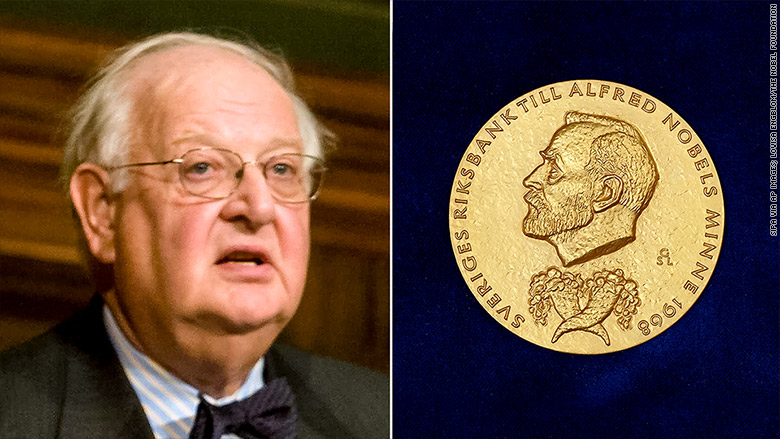
Professor Angus Deaton was awarded the Nobel Prize in Economics by the Royal Swedish Academy of Sciences. Recognized for his work on consumption and poverty measurement, particularly in India, he was educated at Cambridge and serves as a professor at Princeton University.
-
20
Research on Poverty and Economic Reforms in India
Deaton examined why poverty reduction remained limited despite strong economic growth, especially after India’s 1991 reforms. His notable works include studies on health care in rural Rajasthan and food and nutrition in India, co-authored with leading economists.
-
30

Empirical Approach to Economics
Deaton transformed microeconomics, macroeconomics, and development economics by emphasizing real-world data on individual behavior. His work challenged traditional consumption models, aligning economic theory more closely with observed consumer responses.
-
40

Deaton Paradox and The Great Escape
The Deaton Paradox suggests that income should be smoother than consumption, based on empirical observations. In his book "The Great Escape," he explored how health and technological advances contribute to inequality and influence policy and taxation debates.
-
50

Almost Ideal Demand System (AIDS) and Critique of Foreign Aid
Deaton’s prominent contributions include the Almost Ideal Demand System (AIDS) and further development of the Deaton Paradox. He advocates empiricism and criticizes foreign aid as often counterproductive, and received SEK 8 million as the Nobel Prize award.
Frequently Asked Questions
What is the Nobel Prize in Economics?
Who selects the winners of the Nobel Prize in Economics?
How is this list of points about the Nobel Prize in Economics ranked?
Why is the Nobel Prize in Economics sometimes considered different from other Nobel Prizes?
Missing something?
Suggest an addition. Submissions are reviewed before appearing on the list.