
What Killed Napoleon?
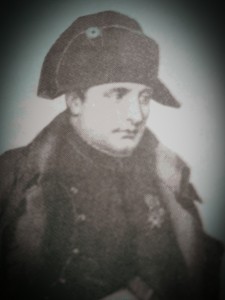
Napoleon Bonaparte (1769 - 1821) tried to poison himself once, in April 1814 after surrendering to the Allies. But the phial he used was two years old and had lost its potency. It merely gave him a violent attack of hiccups which made him vomit and saved his life. Seven years later, by the time Napoleon died in the island of St. Helena in 1821 at the age of 52, he was a very sick man. But the nature of the illness that killed him has never been established for certain. Some doctors have argued that he died of cancer, others that he was poisoned by one of his retainers. Still others have argued that his death was hastened accidentally by toxic vapours from wallpaper dyed with arsenic in his house on St. Helena. In 1982, however, a US specialist, Dr. Robert Greenblatt, came up with a new diagnosis: suggesting that, far from being a sick man, the former emperor of France was becoming a sick woman. Dr. Greenblatt, who specialised in the study of hormones, said that Napoleon was suffering from a glandular disease called the Zollinger-Ellison syndrome. The disease, he said, explained why one of the doctors who examined the emperor's body after his death observed: “His type of plumpness was not masculine, he had beautiful arms, rounded breasts, white, soft skin (and) no hair.” The disease, which was not understood at the time, left another clue, according to Dr. Greenblatt. Napoleon was an ardent lover during his marriage to his first wife, Josephine. But he himself admitted that he had little interest in love-making after he married his second wife, Marie Louise, in 1810. [caption id="attachment_19375" align="aligncenter" width="225"] Napoleon Bonaparte[/caption]
Featured in these lists
-
Rank#3